
 By Mfon Michael
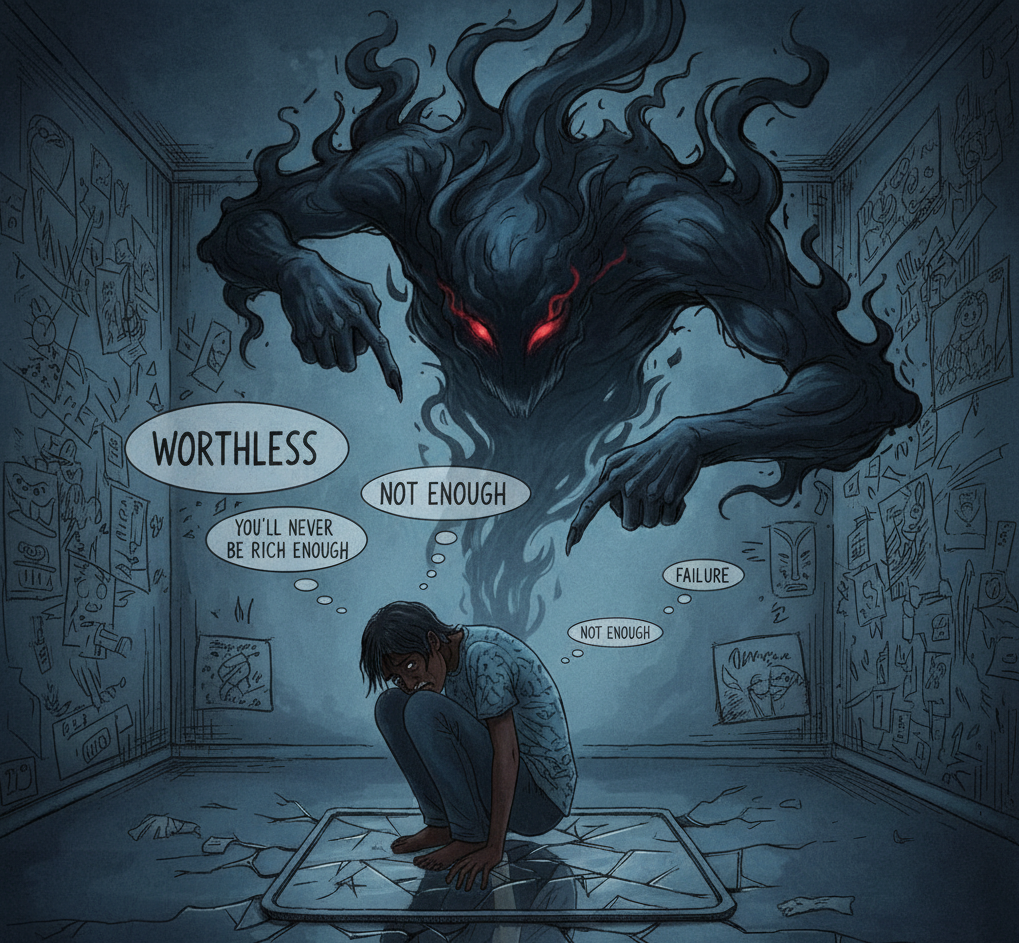
There’s a voice in your head that wakes up earlier than you do.
It doesn’t stretch. It doesn’t yawn.
It just grabs a microphone and says things like:
“You should be doing better by now.”
“If you mess this up, everyone will notice.”
“Try harder. Be better. Don’t embarrass yourself.”
And somehow, it calls this motivation.
Your inner critic has the confidence of a life coach, the urgency of a deadline, and the empathy of a broken alarm clock. It claims it’s only pushing you to succeed but instead of inspiring action, it often leaves you anxious, exhausted, and questioning your worth.
Let’s talk about that voice, why it sounds so convincing, and how to turn down its volume without losing your mind.
It is important to state here that the inner critic is not your enemy; it’s more like a mean critic sometimes, criticizing everything: failure, rest, joy, confidence and most inner critics are built from:
Past criticism (parents, teachers, society, culture)
Fear of failure or rejection
Comparison culture and unrealistic standards
Survival instincts that can often confuse pressure with protection
Its goal is simply to keep you safe by keeping you “in line.”
Unfortunately, its methods include shame, fear, and constant reminders of what you’re doing wrong, sometimes, it may even get you wondering why it sounds like motivation but feels like burnout and here’s the tricky part: the inner critic often uses motivational language like;
“Don’t be lazy” instead of “You’re tired.”
“You can’t afford to fail” instead of “This matters to you.”
“Others are doing better” instead of “You’re learning at your own pace.”
It believes pressure equals progress.
But research and lived experience tell a different story: shame does not build resilience, compassion does and real motivation fuels growth.
Another vital point to note is that the inner critic fuels fear and fear might get you moving, but it rarely gets you thriving.
It is imperative that every individual understands the cost of letting the critic voice dominate:
When the inner critic becomes your main coach, you may notice:
Chronic self-doubt, even after success,
Procrastination fueled by fear of getting it wrong,
Burnout masked as “ambition”,
Difficulty resting without guilt,
Feeling “never enough,” no matter how much you do,
Ironically, the voice that claims to push you forward often keeps you stuck.
To quieten the Inner Critic, You only need to
- Name it
Give that voice a name. When it speaks, say: “Oh, that’s the critic talking.”
Distance creates choice.
- Translate, don’t obey
Behind every harsh statement is usually a softer truth e.g
“You’re failing” mostly indicates that you care about doing well.
“You’re not enough” shows that you want to grow.
- Introduce a kinder coach
Ask yourself: What would I say to a friend in this situation?
Then say that to yourself, out loud if you can.
- Let rest be part of success
Rest isn’t a reward for perfection, it’s fuel for progress.
In conclusion, motivation doesn’t have to hurt to work. Your inner critic may sound confident, loud, and urgent but volume is not always wisdom.
True motivation doesn’t shout, It doesn’t threaten, It doesn’t humiliate you into becoming better.
Real motivation says: “You are allowed to learn,” “You are allowed to rest.”
“You are allowed to grow without hating yourself in the process.”
So the next time that inner voice screams in your head, feel free to adjust the sound system.
Lower the critic.
Raise compassion.
And watch how much stronger, calmer, and braver you become.