
Written by Hafisat A.M. & Ismael U.S.
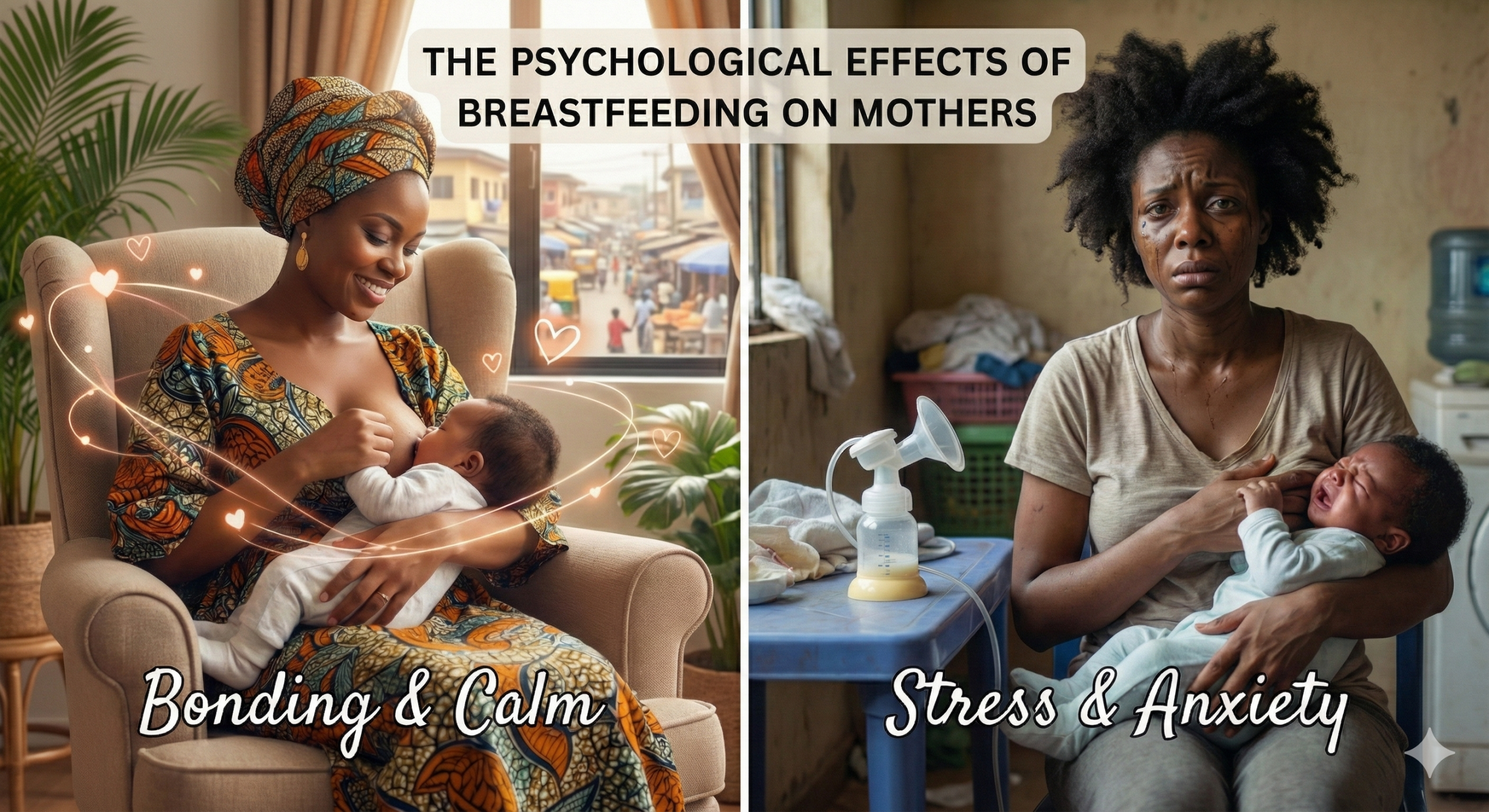
Breastfeeding is often celebrated for its nutritional and health benefits—but its emotional impact on mothers is just as important. Beyond nourishing a baby, breastfeeding can shape a mother’s mental and emotional wellbeing in powerful ways. For some women, it brings joy, bonding, and confidence; for others, it may come with moments of stress, pressure, or emotional overwhelm. Understanding these psychological effects helps mothers feel more supported, prepared, and empowered on their breastfeeding journey.
Positive Psychological Effects of Breastfeeding
- Strengthened Emotional Bond
Breastfeeding provides close physical contact, promoting skin-to-skin connection and emotional intimacy. Many mothers describe it as a deeply bonding experience. - Hormone-Driven Calmness
Hormones like oxytocin and prolactin released during breastfeeding help reduce stress, promote relaxation, and enhance feelings of love and attachment. - Increased Confidence
Successfully navigating breastfeeding challenges can boost a mother’s sense of competence and self-efficacy. Each feeding session reinforces the feeling of “I can do this.” - A Sense of Purpose and Fulfillment
For many mothers, breastfeeding is emotionally rewarding because they feel they are directly contributing to their baby’s growth, comfort, and overall wellbeing.
Possible Psychological Challenges
While breastfeeding is beneficial, it can also bring emotional difficulties that deserve acknowledgment.
- Anxiety and Self-Doubt
Concerns about milk supply, latch issues, or whether the baby is feeding enough can trigger worry—especially for new mothers. - Emotional Stress and Exhaustion
Long nights, frequent feeding, and the pressures of caregiving can lead to fatigue, irritability, and mood changes. - Social or Cultural Pressure
Expectations from family, society, or health campaigns may make some mothers feel guilty or inadequate if breastfeeding is difficult or not possible. - Hormonal Mood Shifts
Natural hormonal fluctuations after birth can influence emotions, sometimes contributing to postpartum mood changes.
How to Support Mothers Emotionally During Breastfeeding
Creating a nurturing environment makes a significant difference in a mother’s emotional experience.
- Family and Partner Support
Encouragement, practical help, and emotional presence from loved ones help reduce stress. - Peer Support Groups
Connecting with other breastfeeding mothers can reduce feelings of isolation and provide real-life reassurance. - Professional Guidance
Healthcare providers, lactation consultants, and counselors can offer expert advice that eases fears and builds confidence. - Self-Care Practices
Adequate rest, hydration, proper nutrition, and asking for help are essential in maintaining emotional balance.
Conclusion
Breastfeeding affects mothers not just physically but emotionally. Recognizing both the positive and challenging psychological impacts allows us to support mothers more compassionately. When mothers feel heard, understood, and encouraged, they can navigate their breastfeeding journey with greater confidence and emotional wellbeing.