A Simple Awareness Guide for Parents

Many parents think dyslexia is just “difficulty reading,” but dyslexia appears in different
forms, and each child may struggle in different ways.
The DSM5TRdoesnot list “types” of dyslexia as separate diagnoses. Instead, it
classifies dyslexia under Specific Learning Disorder (SLD) with impairment in reading.
However, professionals use types to help parents and teachers understand how a child
struggles and what kind of help they need.
Understanding these types helps parents: notice signs early avoid blaming the child
seek proper diagnosis and support
What the DSM-5-TR Says (In Simple Terms)
According to DSM-5-TR Made Easy:
Dyslexia is diagnosed when reading difficulties are persistent, below what is expected
for age, and not caused by lack of teaching, vision problems, or low intelligence.
Common Types of Dyslexia Parents Should Know
Phonological Dyslexia
(Most common type)

What It Means
Difficulty connecting letters to sounds.
What Parents May Notice • Trouble sounding out words (e.g. c-a-t) • Struggles with
rhyming • Difficulty reading new or unfamiliar words • Guessing words instead of
sounding them out.
This reflects problems with phonological processing, a core feature of dyslexia.
Simple Summary for Parents
“My child sees the letters but cannot turn them into sounds.”
Surface Dyslexia
(Difficulty recognizing whole words)
 What It Means
The child cannot recognize words by sight and reads every word slowly, letter by letter.
What Parents May Notice • Very slow reading • Difficulty with common words like said,
was, one • Reads the same word differently each time • Avoids reading aloud.
This shows problems with word recognition and reading fluency.
Simple Summary for Parents
“My child reads, but it is painfully slow and tiring.”
Rapid Naming Dyslexia
(Speed-related dyslexia)

What It Means
Difficulty quickly naming letters, numbers, colours, or objects.
What Parents May Notice • Child knows the answer but responds very slowly •
Struggles with timed reading tasks • Trouble recalling words quickly • Poor reading
fluency despite practice
This affects reading fluency, not intelligence.
Simple Summary for Parents
“My child knows it, but the answer comes out too slowly.”
Double Deficit Dyslexia
(Combination of two difficulties)

What It Means
A combination of: • phonological difficulty and • slow naming speed
What Parents May Notice • Severe reading struggles • Very poor spelling • Strong
frustration and avoidance of schoolwork • Reading progress remains slow despite effort
This represents multiple reading impairments, making learning harder without support.
Simple Summary for Parents
“My child struggles with reading in many ways at once.”
Visual Dyslexia (Commonly Misunderstood)
(Often confused but still important)
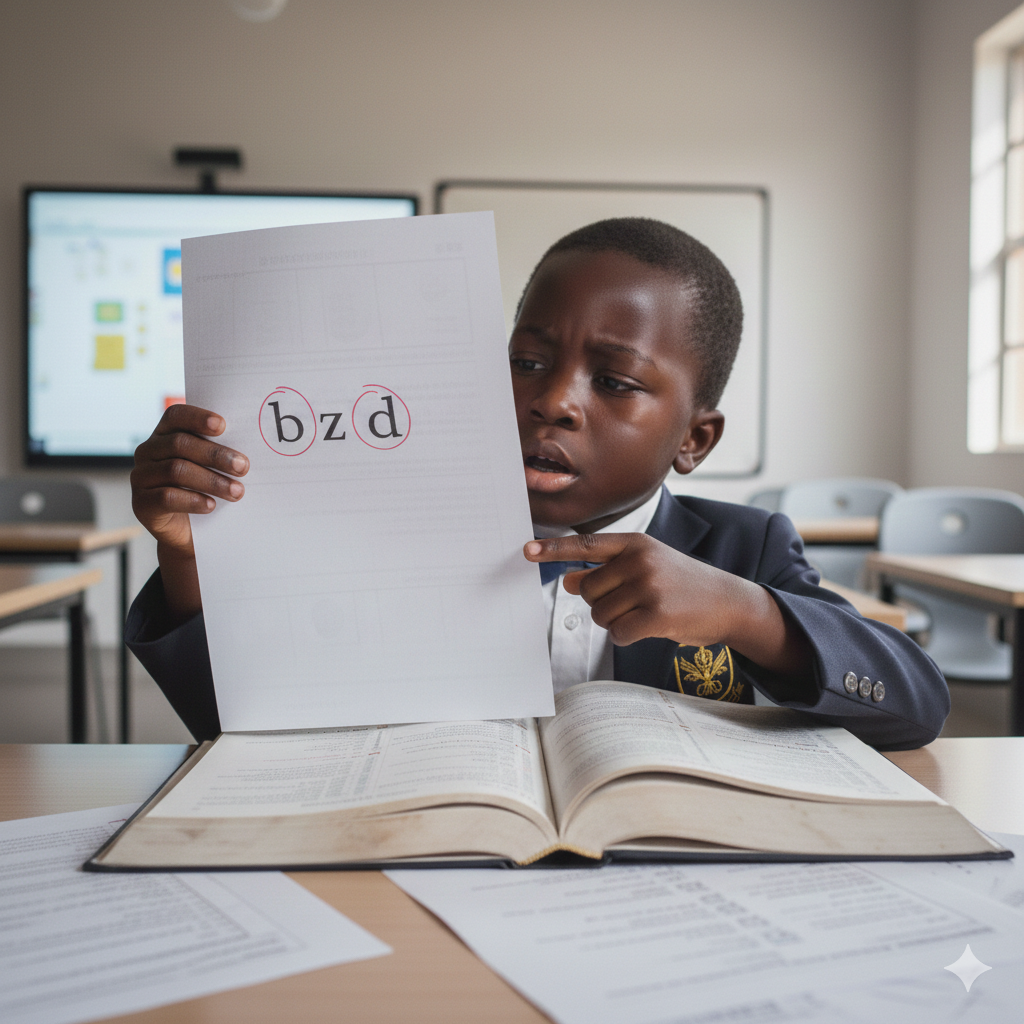
What It Means
Difficulty processing visual symbols like letters and words.
What Parents May Notice • Letter reversals (b/d, p/q) • Skipping lines while reading •
Complaints that words “move” or “blur” • Poor copying from the board
Visual issues alone do not cause dyslexia, but they may co-occur with reading
difficulties.
Simple Summary for Parents
“My child struggles with how words look on the page.”
Auditory Dyslexia
(Sound-processing difficulty)

What It Means
Difficulty processing spoken language.
What Parents May Notice • Trouble following verbal instructions • Mishears words •
Difficulty remembering what was said • Struggles with spelling from dictation
Language-processing difficulties often accompany dyslexia.
Simple Summary for Parents
“My child hears, but the brain struggles to process the sounds.”
When Should Parents Seek Diagnosis?

Parents should seek assessment if: • Difficulties persist over 6 months • The child
struggles more than peers • Extra teaching does not help • The child avoids reading or
school.
Even if it turns out not to be dyslexia, early assessment is still helpful.
Who Can Diagnose Dyslexia? • Educational psychologists • Clinical psychologists •
Child neuropsychologists • Learning disability specialists
Final Message to Parents
Dyslexia is not laziness. It is not stubbornness. It is not spiritual
It is a neurodevelopmental learning difference.
Awareness is the first step. Understanding is the second step. Support changes
everything
