
By Amina Shaibu • July 2026
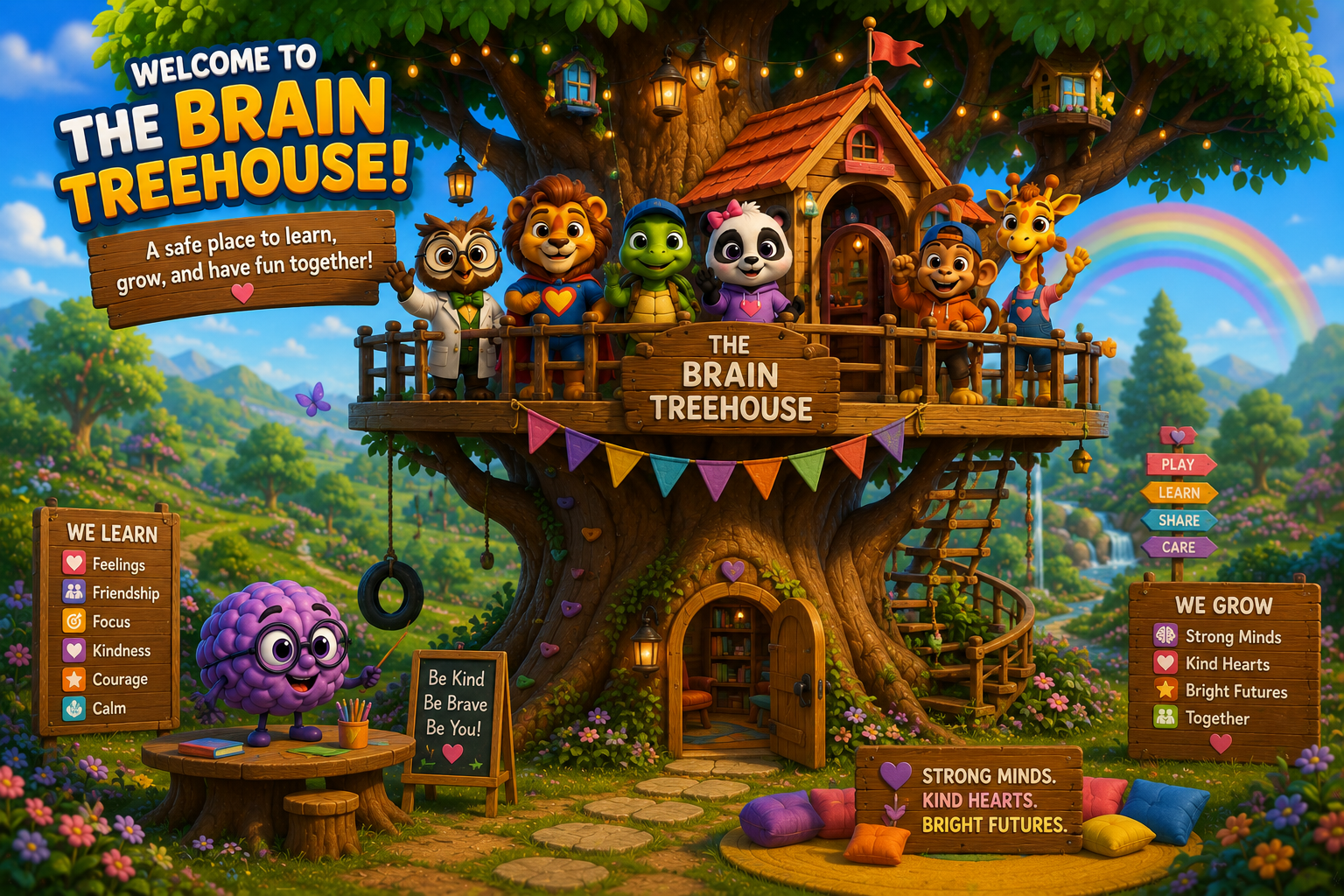
What Is a Mental Health Hero?
A Mental Health Hero is someone who:
-
Talks about their feelings honestly.
-
Asks for help when needed.
-
Supports others who are struggling.
-
Shows kindness and empathy.
-
Learns healthy ways to cope with challenges.
According to principles found in the DSM-5-TR (and simplified explanations often called “DSM-5-TR Made Easy”), good mental health involves emotional awareness, healthy relationships, resilience, and the ability to function effectively in daily life. Mental Health Heroes help promote these exact qualities.
Meet the Mental Health Heroes
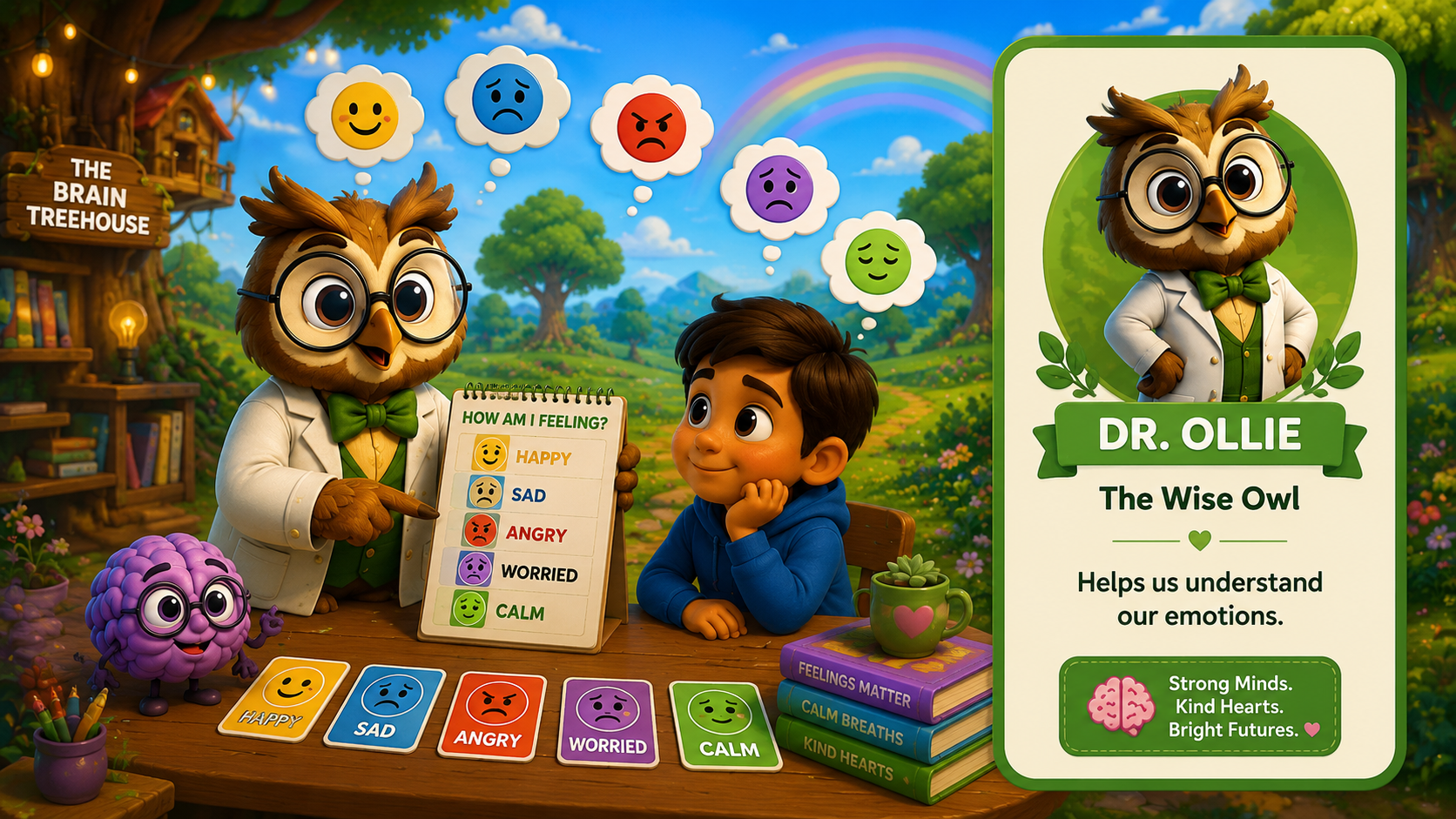
Hero #1: Dr. Ollie
Who is she?
She listens, encourages, and supports others.
What children can learn:
-
It is okay to ask someone for help.
-
Supporting others is a sign of strength.
-
Listening can make someone feel valued.
Key Insight: Many mental health challenges become easier to manage when people have supportive relationships. Social support is one of the strongest protective factors for mental well-being.
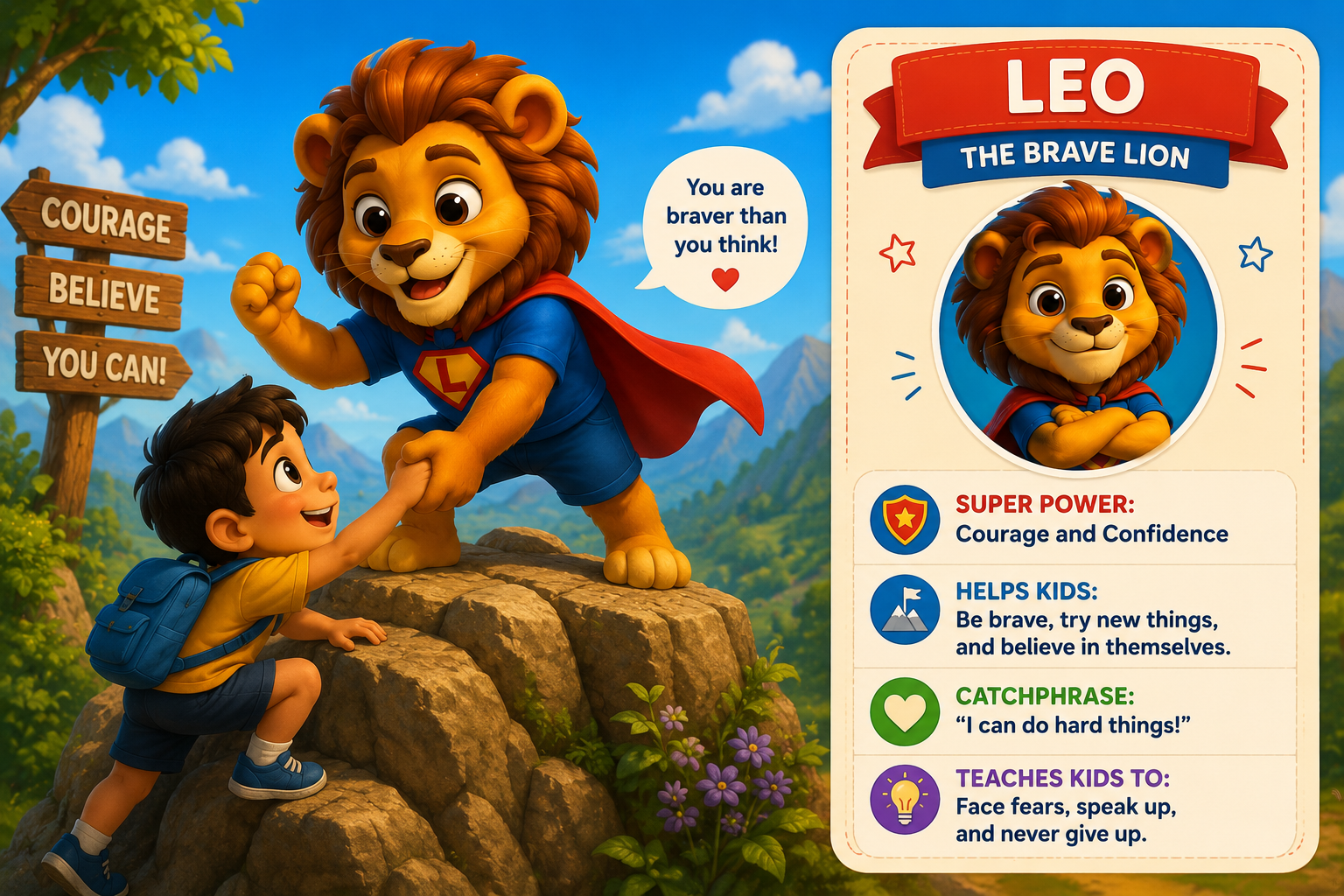
Hero #2: Leo
Who is he?
He can identify and express his emotions appropriately.
What children can learn:
-
It is okay to say “I feel sad.”
-
It is okay to say “I feel worried.”
-
Emotions are normal and important.
Key Insight: Many emotional and behavioural difficulties involve challenges in understanding or regulating feelings. Teaching emotional vocabulary helps children communicate before problems become overwhelming.
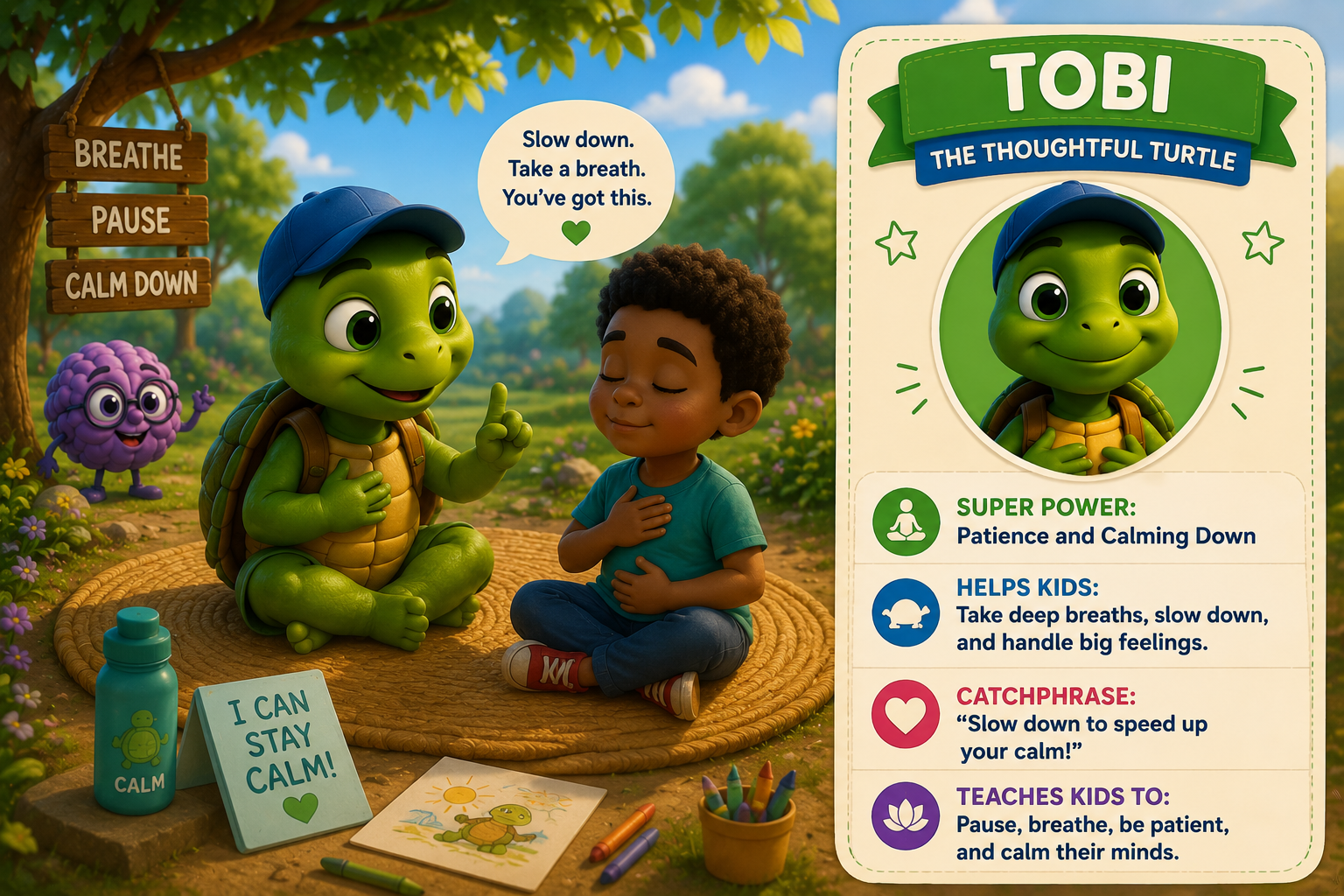
Hero #3: Tobi
Who is she?
She is someone who keeps trying even after setbacks.
What children can learn:
-
Mistakes are opportunities to learn.
-
Failure does not define a person.
-
Persistence builds confidence.
Key Insight: Children who develop resilience often cope better with stress, disappointment, and life transitions.
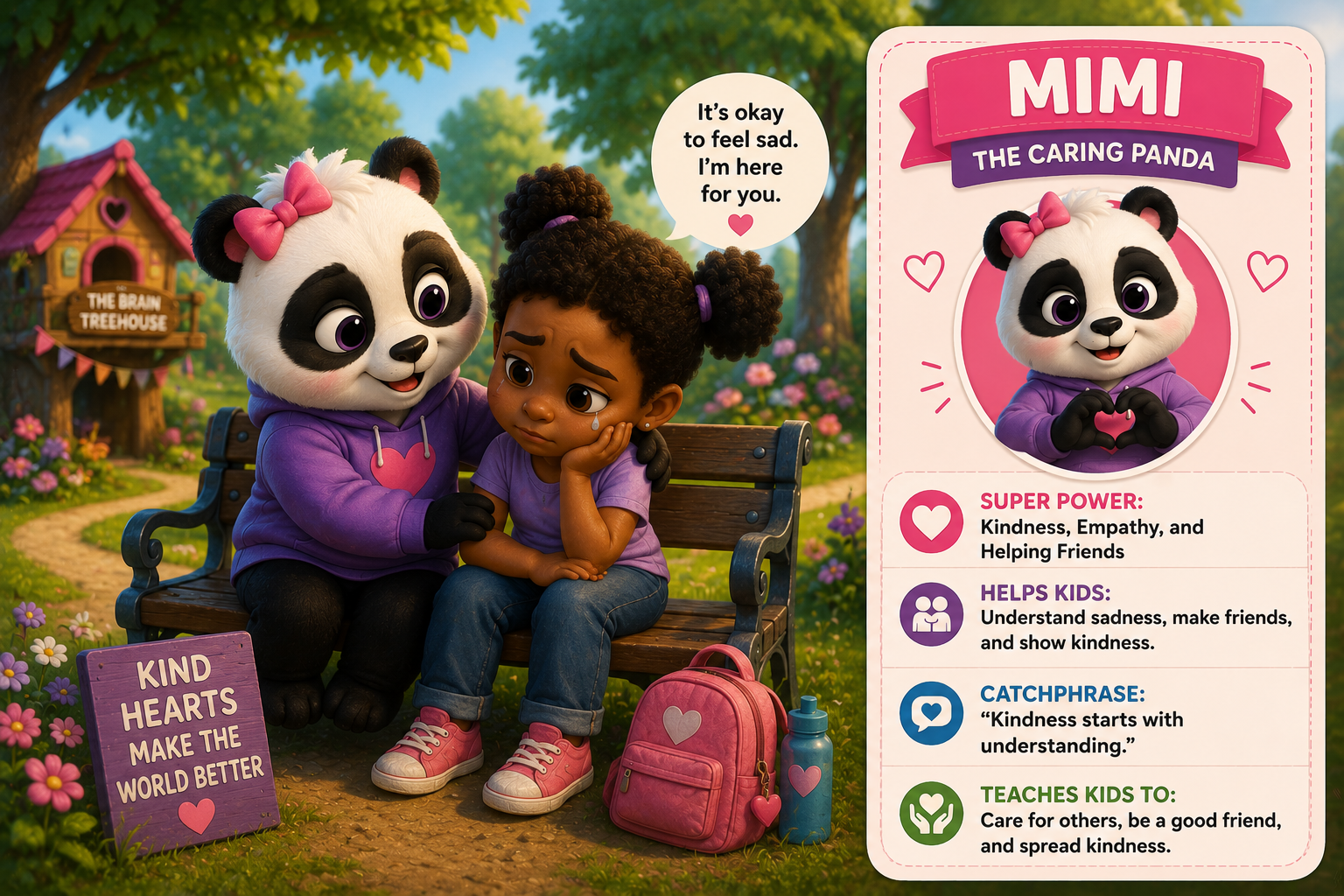
Hero #4: Mimi
Who is she?
She treats others with respect and compassion.
What children can learn:
-
Kind words matter.
-
Everyone deserves respect.
-
Small acts of kindness can improve someone’s day.
Key Insight: Positive social interactions contribute to emotional well-being and healthy development.
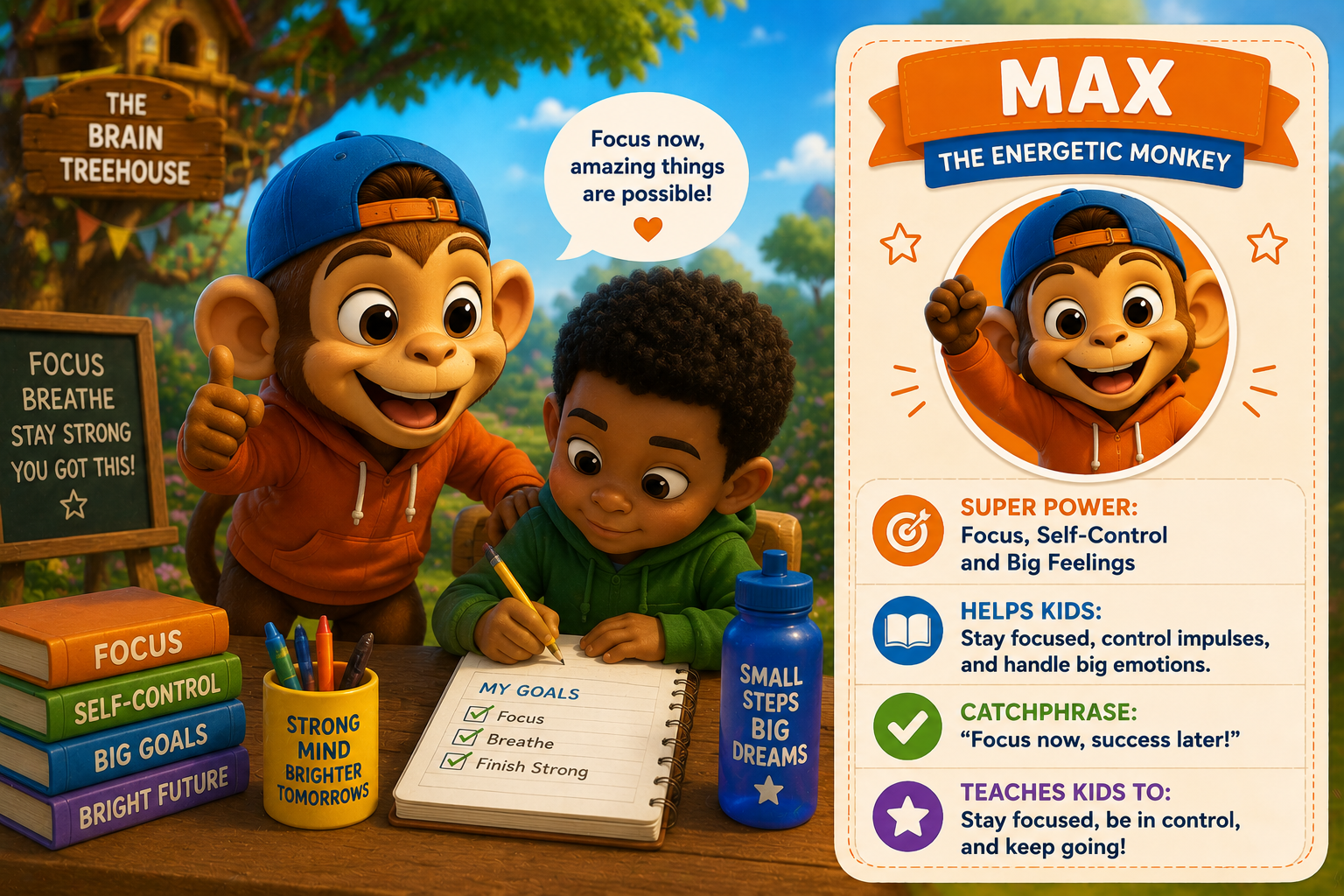
Hero #5: Max
Who is he?
He is someone who recognizes when he needs support and seeks it.
What children can learn:
-
Asking for help is brave.
-
Mental health professionals help people feel better.
-
Problems do not have to be faced alone.
Key Insight: Seeking professional support early can improve outcomes for many emotional, behavioural, and developmental challenges.
What Nigerian and African Parents Should Know
In Nigeria and across Africa, mental health conversations are becoming more common, but many families still view emotional struggles as weakness, stubbornness, or poor behaviour.
Children need to know:
-
Mental health is part of overall health.
-
Everyone has feelings.
-
Asking for help is normal.
-
Kindness and empathy are strengths.
-
People with mental health challenges deserve support, not stigma.
Conversation Starters for Parents
Try asking your child:
-
Who helps you when you feel sad?
-
What makes you feel brave?
-
How do you help your friends?
-
Who is a hero in your life and why?
-
What can you do when you feel worried or upset?
These simple conversations help children build emotional intelligence and mental wellness skills that can last a lifetime.
Final Message
Mental Health Heroes are not famous celebrities or fictional superheroes. They are ordinary people who show courage, kindness, resilience, honesty, and compassion every day.
When we teach children about Mental Health Heroes, we teach them that true strength is not hiding emotions—it is understanding them, managing them, and helping others do the same.
Awesome heroes. Would definitely teach the children the 5 mental healt heroes.